
5 Methods for Hand Tying Your Quilt
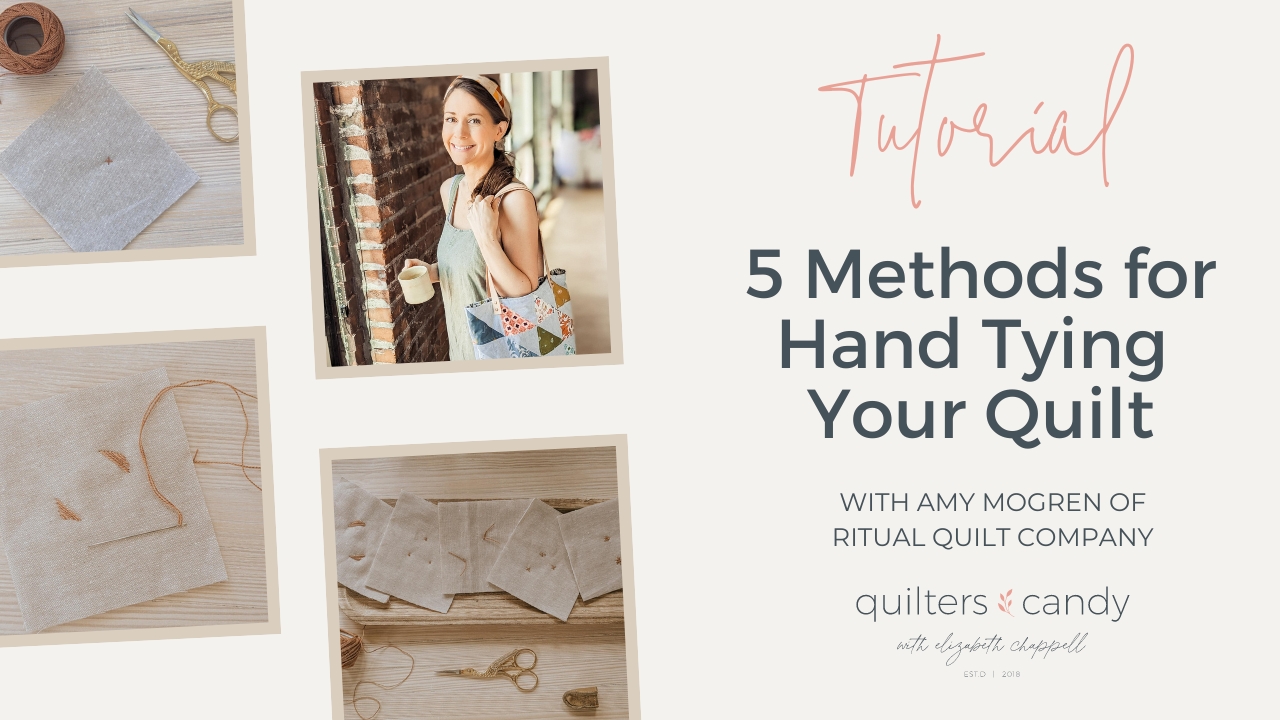
I’m Amy Mogren, the designer behind Ritual Quilt Company and I’m excited to share 5 methods for hand tying your quilt! Hand tying eliminates the need for machine or traditional hand quilting, and it’s a great finishing option for quilts that are too large to quilt with your domestic machine or for quilts with prairie point borders.
These stitches are really fun, once you get the hang of them, and the best part is that your stitches don’t have to be perfect. Variation in the ties creates interest and gives an artisan feel. While hand tying is typically seen as old fashioned or vintage, you can definitely use different knots to keep your finished quilt looking fresh and modern.
Try combining some of these stitches together in one quilt for a truly one-of-a-kind finish.
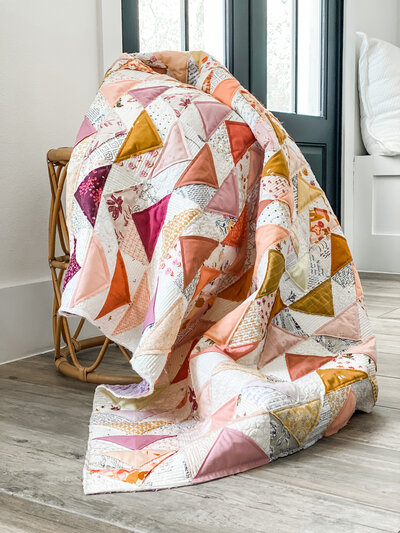
If you’d like to make a quilt like the one I hand tied in this blog post, you can download the free pattern here:

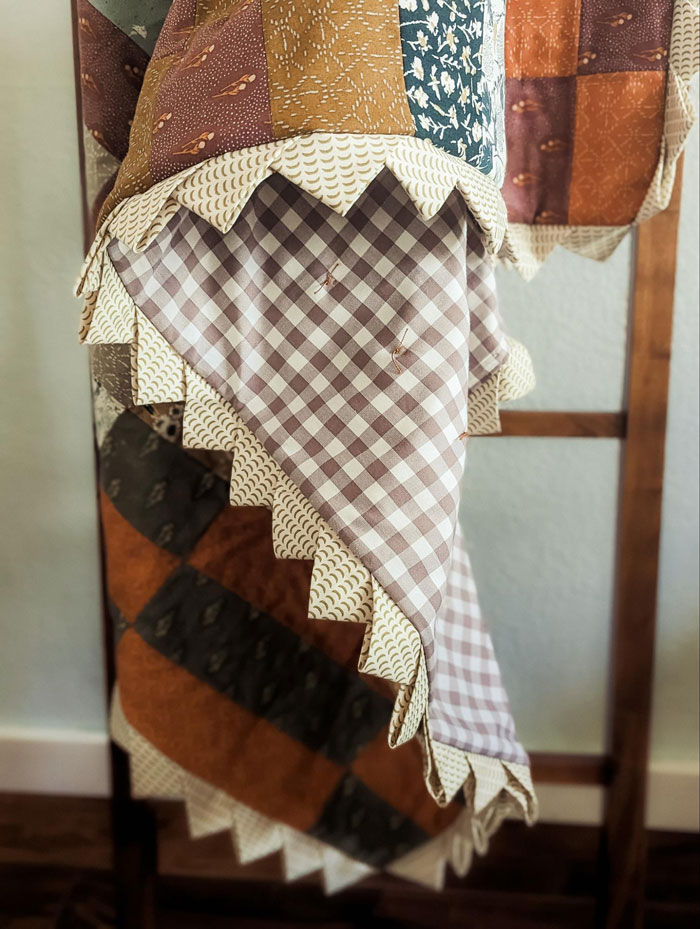
The quilt above is finished with traditional ties.
SUPPLIES:
You do not need a quilting hoop for hand tying; simply rest the quilt on your lap and use your hands to bunch and gather the quilt as needed.
–Thread or Yarn: Yarn will result in a bulkier tie and a more old fashioned look. It requires a thicker needle and will make larger holes in your quilt, making it difficult to undo any work. This tutorial will focus on using thread.
–Thread: 12 wt Aurifil, #8 perle cotton, or embroidery floss.
–Marking tool: chalk pencil, water soluble marker, or erasable pen
–Needle: I typically use an embroidery needle for all hand quilting projects; you can find them at most craft stores. They often come in multipacks with a variety of sizes, so you don’t need to stress about choosing the exact right size. See what fits your thread and feels comfortable to you.
–Thimble: Optional, but you can wear it on the finger used to push the needle through the fabric.
–Batting: Use batting without scrim. If the batting has it, this will be noted on the front of the batting package. Scrim is polyester or glue that is added to the batting fibers to make them more stable and prevent stretching. Scrim makes the batting dense and more difficult to hand stitch through.
-My favorite batting to hand tie or hand quilt with is either bamboo or silk blend batting, due to the softness of the fibers.
TIE PLACEMENT
-Depending on the batting you use, ties can be placed up to 8-10 inches apart; but for extra security, I’d recommend 4-6 inches apart. Be sure to check your quilt batting package for specifics on how far apart you can place your knots without compromising the integrity of your quilt.
-Before you start tying, mark where you plan to place each knot. You can use one of the recommended marking tools, or if your patchwork is small enough, you could forgo marking altogether and place knots at the intersections of your patchwork.
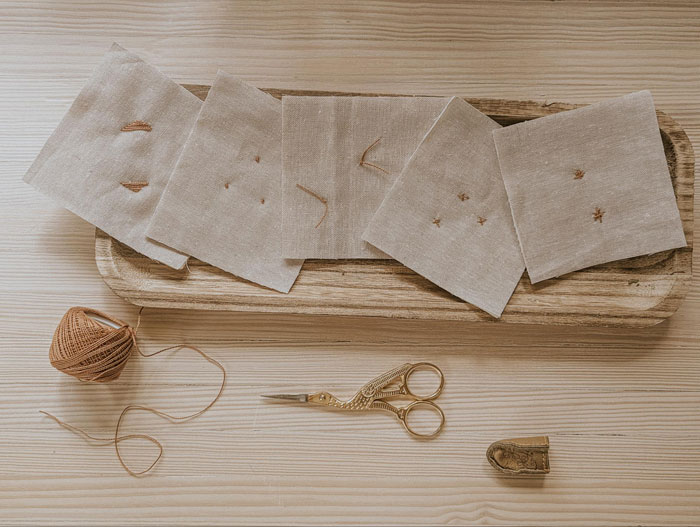
5 WAYS TO HAND TIE A QUILT:
Traditional Ties (square knot)
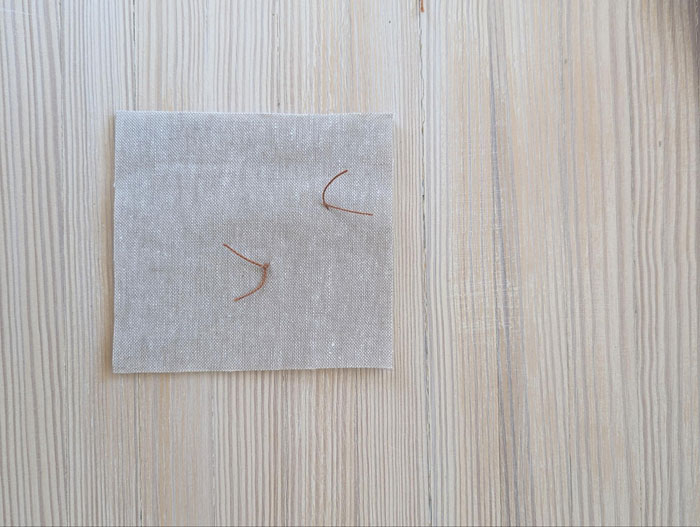
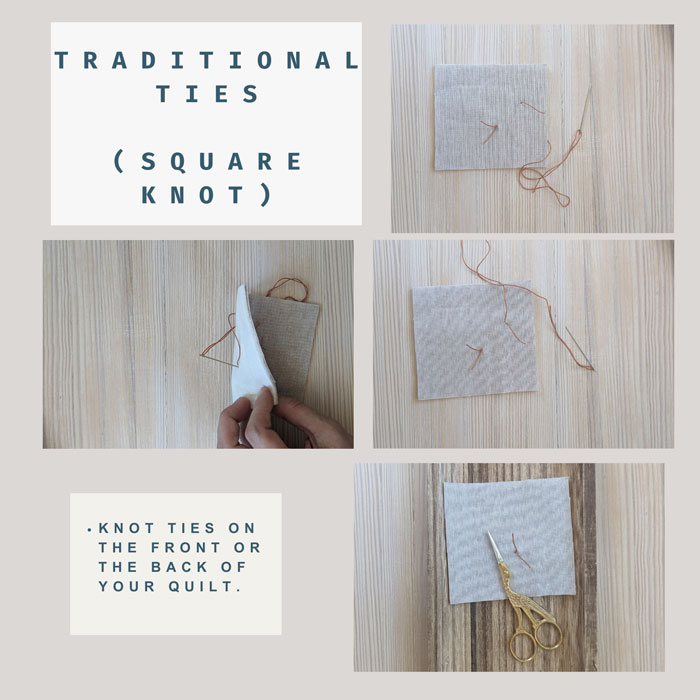
- Thread your needle with your thread of choice. Do not knot the end of the thread. I like to use a thread cut to the length of my forearm, so I can make multiple ties without rethreading the needle. Any length longer than this tends to knot.
- Push the needle from the front all the way through the back of the quilt. Pull the thread until there is a 2” thread tail on the quilt top.
- Push the needle from the back of the quilt up through the front of the quilt again, ⅛” to ¼” away from where the needle was initially inserted. This will result in a small stitch on the back of the quilt.
- Trim the second thread tail to a comfortable length for tying.
- Make a square knot with both thread tails, and trim to your desired length. I’d recommend no shorter than ¼” for knot stability.
- You can choose whether you’d like the thread tails to show on the front or the back of your quilt!
“X” ties
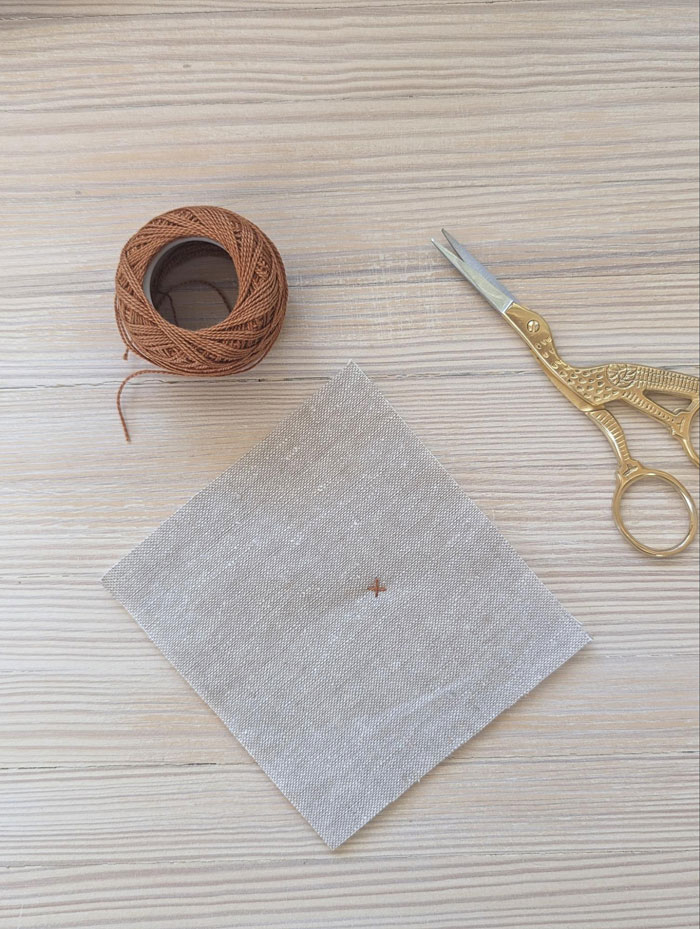
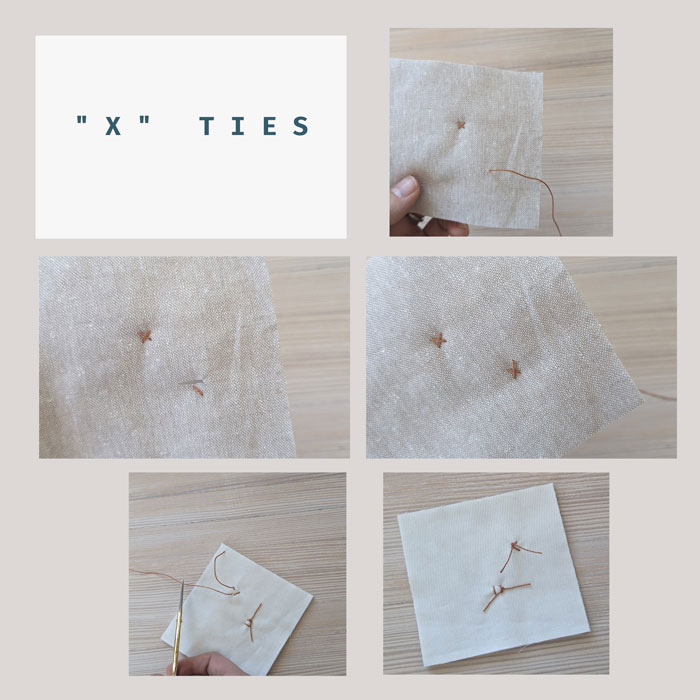
- Thread your needle and make a knot on one end of the thread. Leave a tail at least 2” long.
- Push the needle from the back of the quilt through the front of the quilt.
- Make a diagonal stitch about ¼” to ½” in length.
- Bring the needle back through the front of the quilt about ¼” away from the initial entry point.
- Make another diagonal stitch that crosses over the first stitch. Push the needle all the way through the quilt layers to the back of the quilt and pull the “X” stitch taught.
- Make a square knot with the two thread tails on the back of the quilt.
French Knot Ties
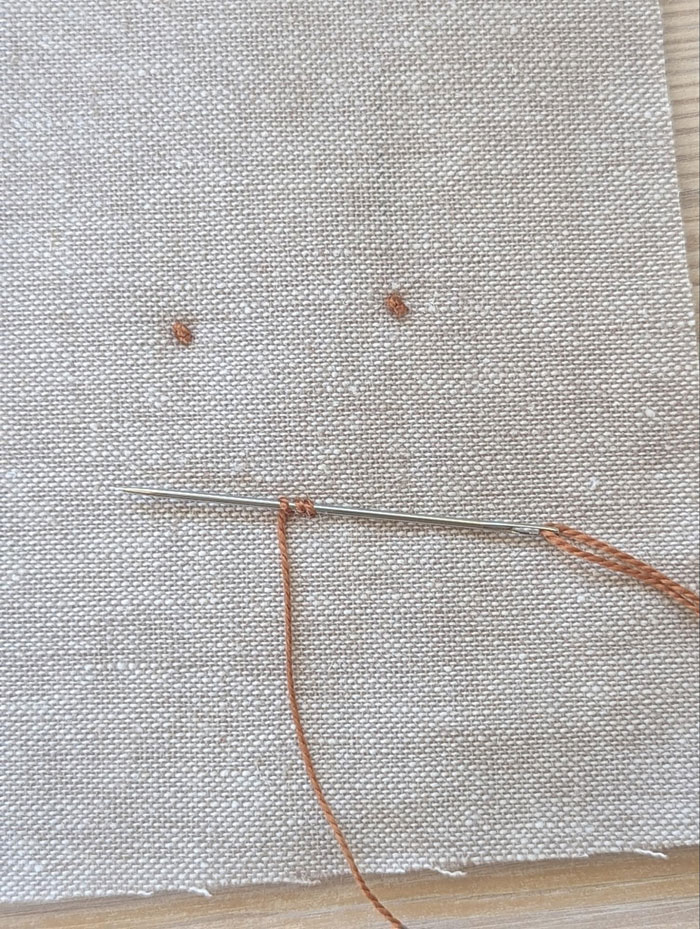
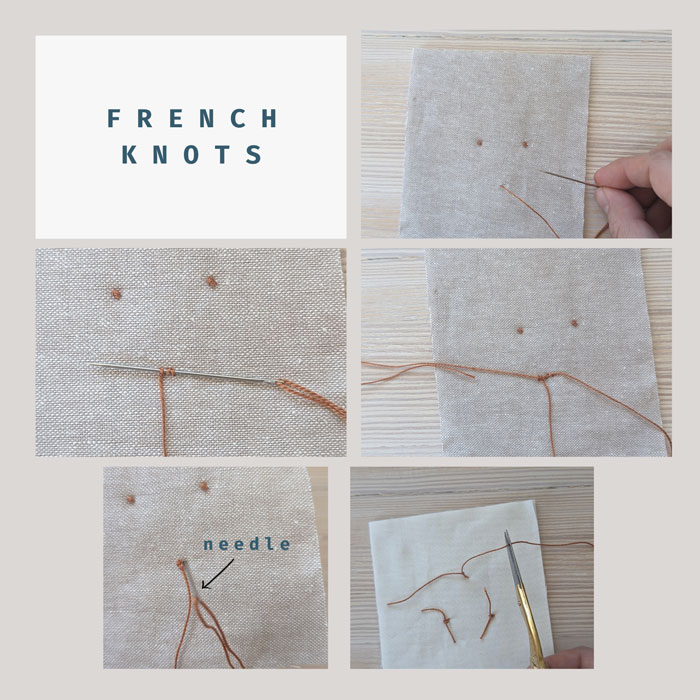
- Thread your needle and make a knot on one end of the thread. Leave a tail at least 2” long.
- Push the needle from the back of the quilt through the front of the quilt.
- To make a french knot, hold the needle parallel and close to the quilt top. Wrap the thread around the needle two to three times, depending on how large you want your knot to be.
- Push the needle back down through the quilt top, very close to the initial insertion point.
- Trim the second thread tail to a comfortable length for tying.
- Make a square knot with both thread tails, and trim to your desired length. I’d recommend no shorter than ¼” for knot stability.
Star Stitch
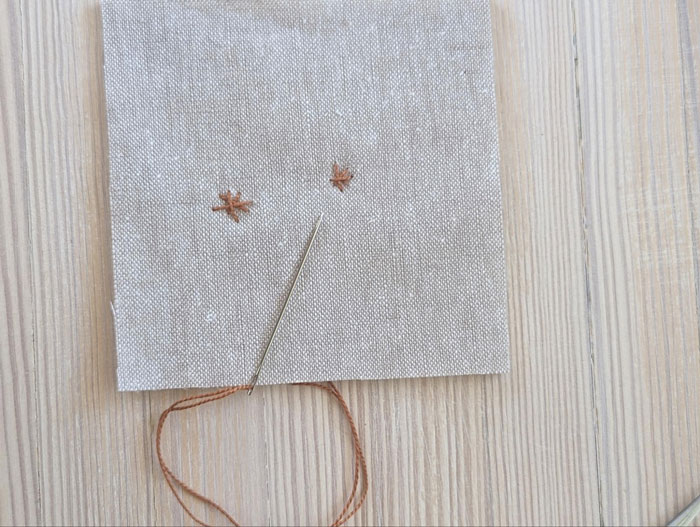
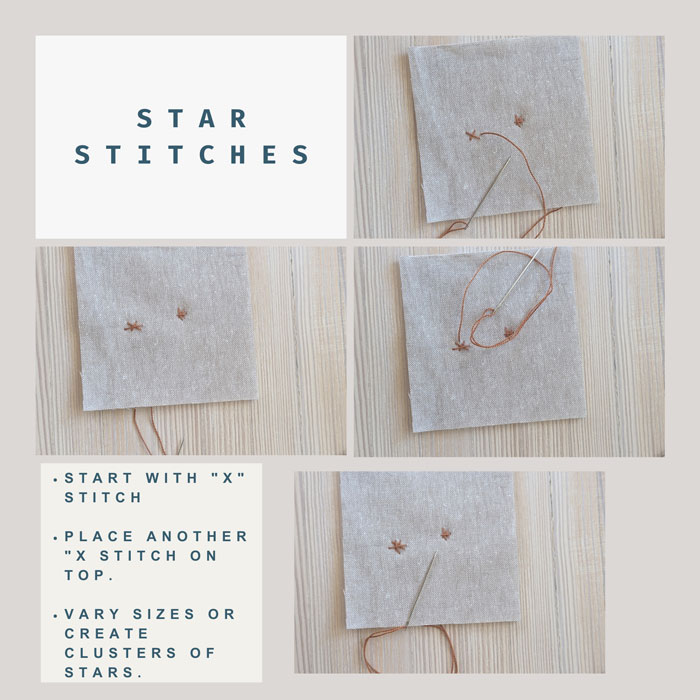
To make this decorative stitch, you’ll basically create two “x” stitches on top of each other. This one is really fun, because you can switch up your stitch length to create organic looking stars, or you can create clusters of stars on your quilt.
- Thread your needle and make a knot on one end of the thread. Leave a tail at least 2” long.
- Push the needle from the back of the quilt through the front of the quilt.
- Make a diagonal stitch about ¼” to ½” in length.
- Bring the needle back through the front of the quilt about ¼” away from the initial entry point.
- Make another diagonal stitch that crosses over the first stitch. Push the needle all the way through the quilt layers to the back of the quilt and pull the “X” stitch taught.
- Do not tie your thread yet; repeat steps 3-6.
- Make a square knot with the two thread tails on the back of the quilt, and trim to desired length.
Satin Stitch
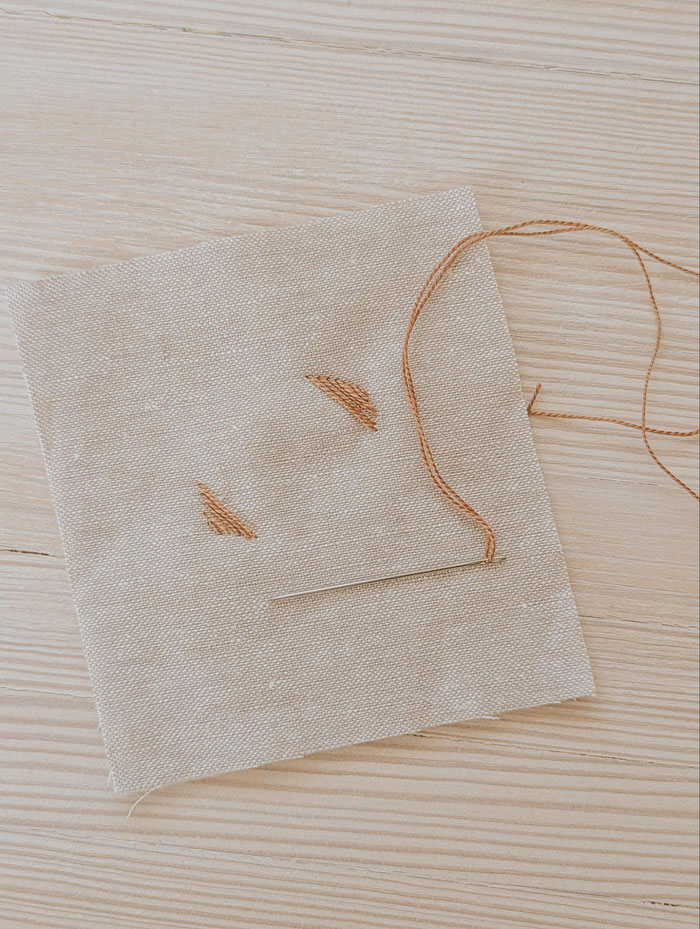
- I Recommend Perle cotton or embroidery floss for this stitch.
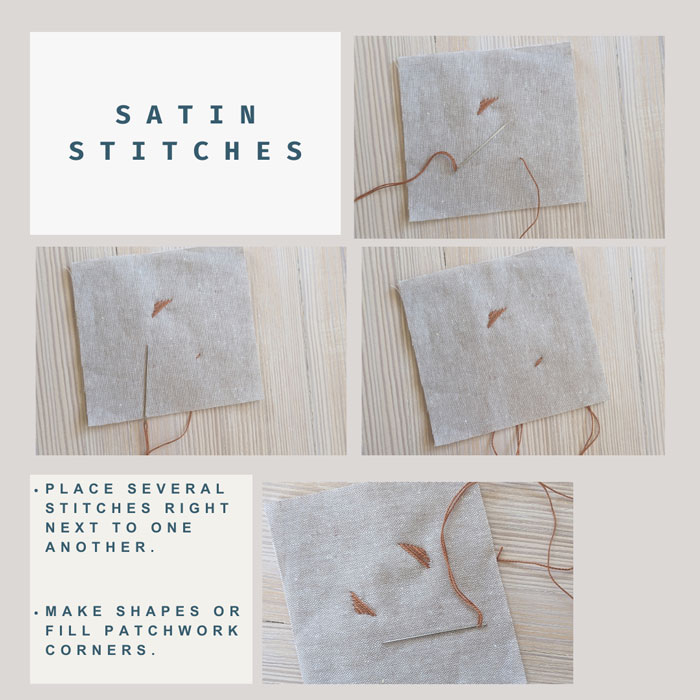
- To make a satin stitch, you’ll place several stitches right next to one another. Use a stitch length of ¼” to ½”.
- You can use the satin stitch to fill the corners or intersections of your patchwork, creating whatever shape you’d like. You could even choose to use your marking tool to draw shapes on your quilt top that will be filled with satin stitching.
Give these ties a try, and let me know if you have any questions! You can find me over at ritualquiltcompany.com and on Instagram @ritualquiltcompany.
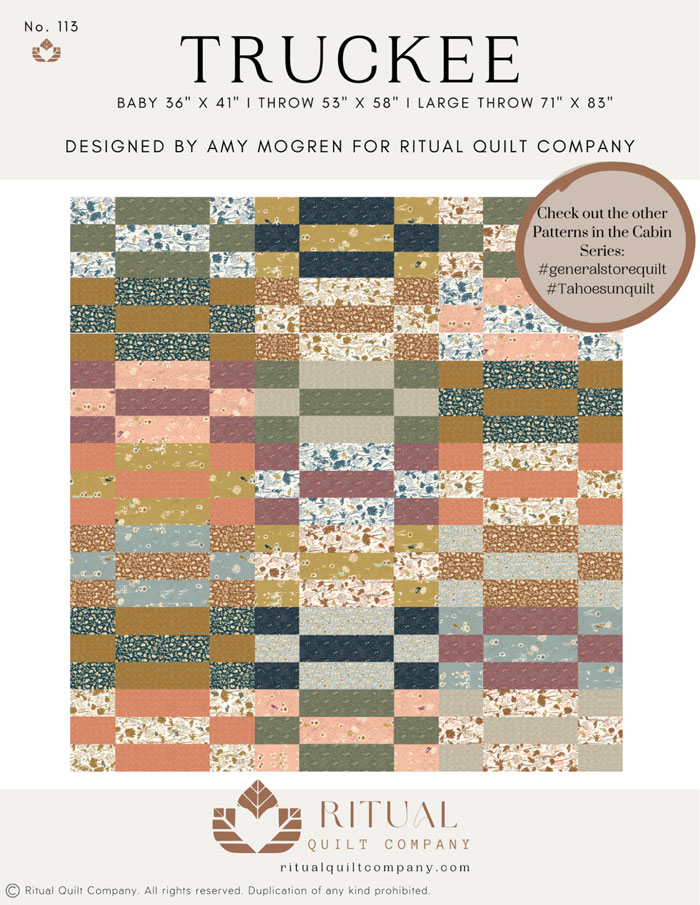
If you’d like to make a quilt like the one I hand tied in this article, you can download the free pattern here:
MORE BLOG POSTS LIKE THIS ONE
Did you enjoy this tutorial? Be sure to check out these free tutorials:
RECENT BLOG entries
5 Methods for Hand Tying Your Quilt
5 Methods for Hand Tying Your Quilt
5 Methods for Hand Tying Your Quilt
5 Methods for Hand Tying Your Quilt
5 Methods for Hand Tying Your Quilt
5 Methods for Hand Tying Your Quilt

the latest
October 29, 2026
Should creative entrepreneurs use AI? In this episode of the Craft to Career Podcast, I’m sharing my personal thoughts on AI and how I’m thinking about it as a quilt pattern designer and small business owner. There’s a lot of backlash against AI right now, and much of it is for good reason. I talk […]
tune into the
Craft to Career
Podcast
Each week get insights on how to turn your craft into a successful career. With both guest speakers and tips from myself, you get valuable, free education on the Craft to Career podcast!