Turned-Edge Appliqué Made Easy: Faster, Precise Results

June 24, 2026

Turned-Edge Appliqué Made Easy: Faster, Precise Results
Turned-edge appliqué is beautiful, timeless, and full of creative possibilities. But for many quilters, the process can feel intimidating. Tracing every shape, mastering needle-turn, working with messy starch, or cutting freezer paper out of the back of a project can make appliqué feel slow and frustrating.

That is exactly why I developed my Innovative Appliqué method.

My mission is to help you confidently increase your quilting skills while making the most of your time. With this method, you can create precise turned-edge appliqué shapes without tracing, needle-turn, or removing freezer paper from the back of your project.

You do not need years of practice to get clean, polished results. You simply need a process that makes sense.

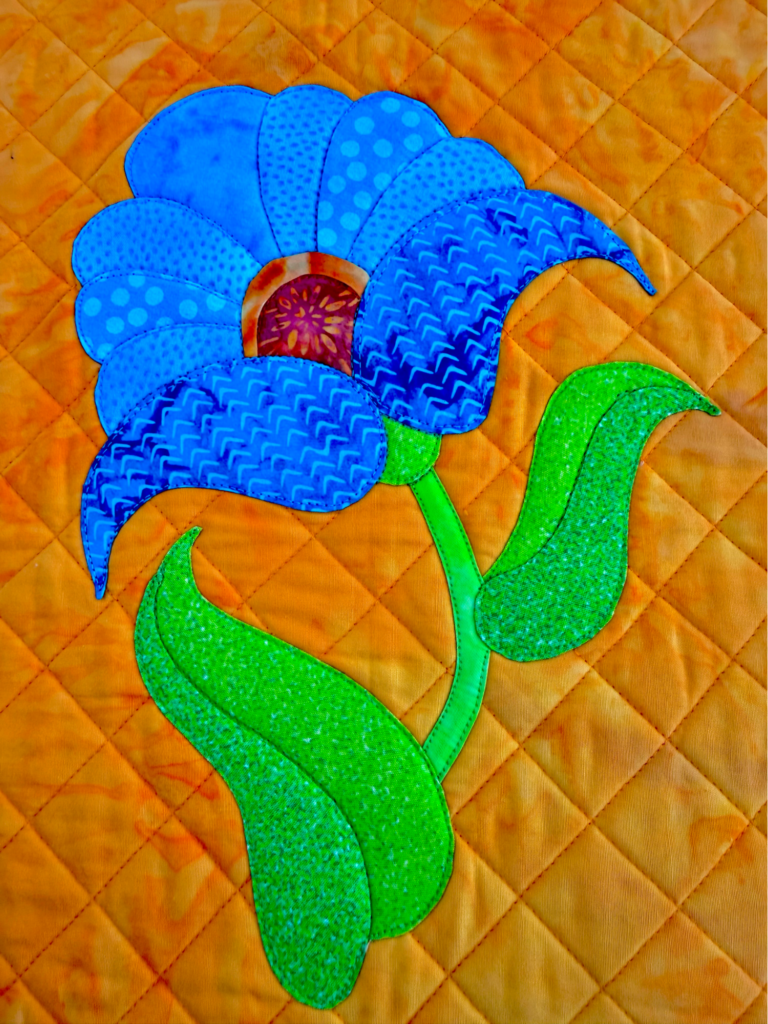
Finished turned-edge appliqué flower quilt with layered blue petals and green leaves on an orange quilted background.

Why I Created a Faster Turned-Edge Appliqué Method

I fell in love with a set of seasonal table topper patterns and knew I wanted to make them with turned-edge appliqué. The problem was that I did not know how to appliqué.

So, I began taking classes.

I learned a variety of techniques, but I kept running into the same challenges. Needle-turn appliqué felt like it would take a long time to master. Freezer paper gave me great control over my fabric shapes, but starch was messy, tiny irons felt dangerous, and cutting freezer paper out of the back of the project seemed like an accident waiting to happen.

I also kept asking myself: Why trace a shape when we can copy and print it?

Over time, I developed a method that eliminated many of those frustrations. My goal is to help you enjoy turned-edge appliqué, feel confident in the process, and create beautiful results without making things harder than they need to be.

Supplies for Turned-Edge Appliqué

Before you begin, gather these supplies:

  • Your appliqué pattern
  • Background fabric
  • Fabric for your appliqué shapes
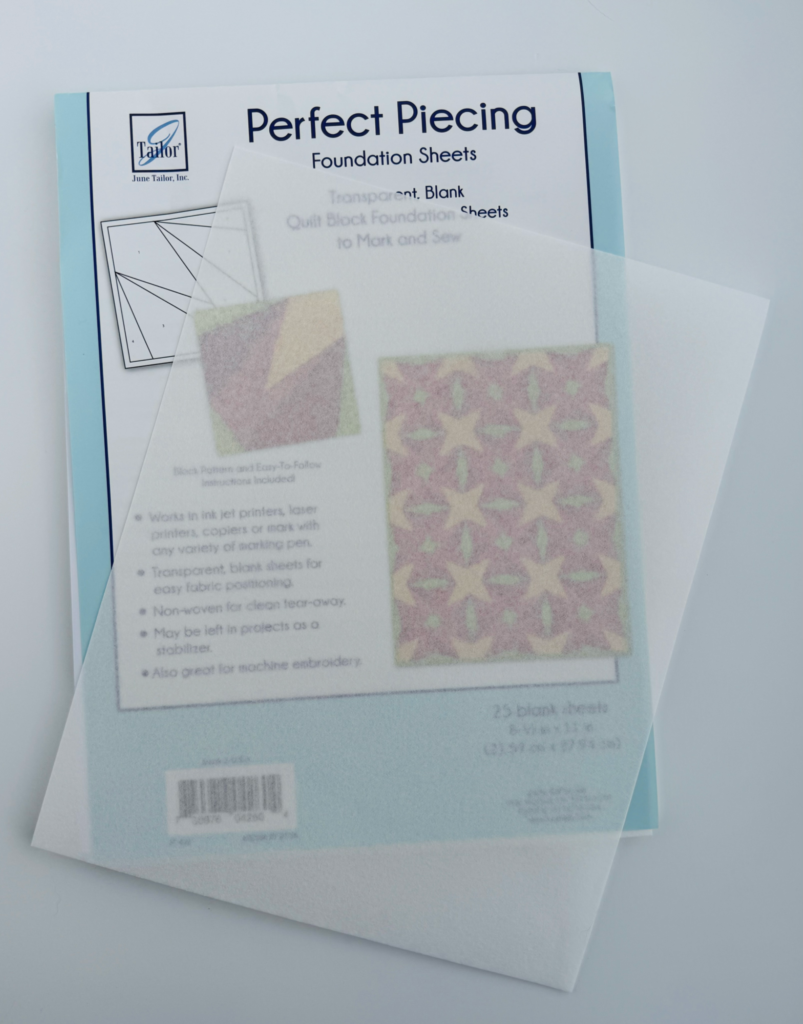
  • Perfect Piecing or another printable foundation material
  • Heavyweight freezer paper
  • Copier or printer
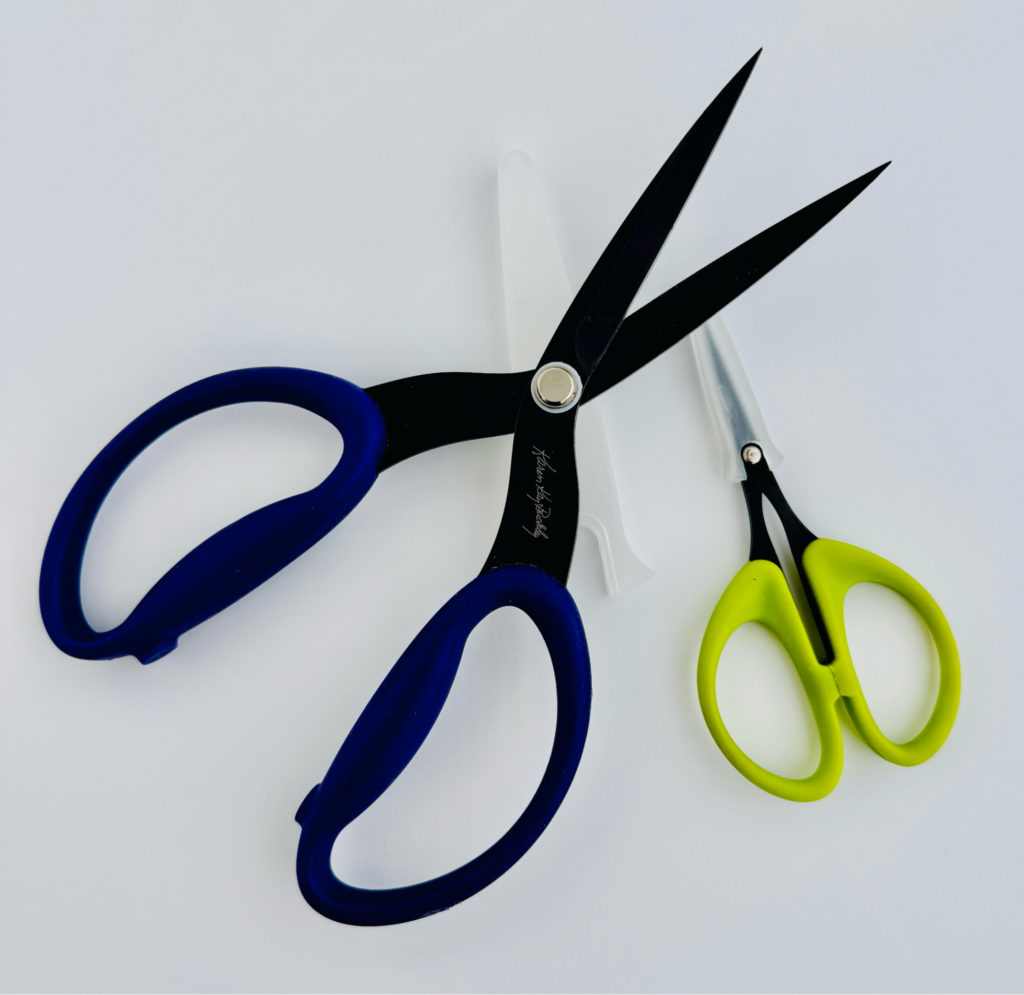
  • Karen K. Buckley Perfect Scissors
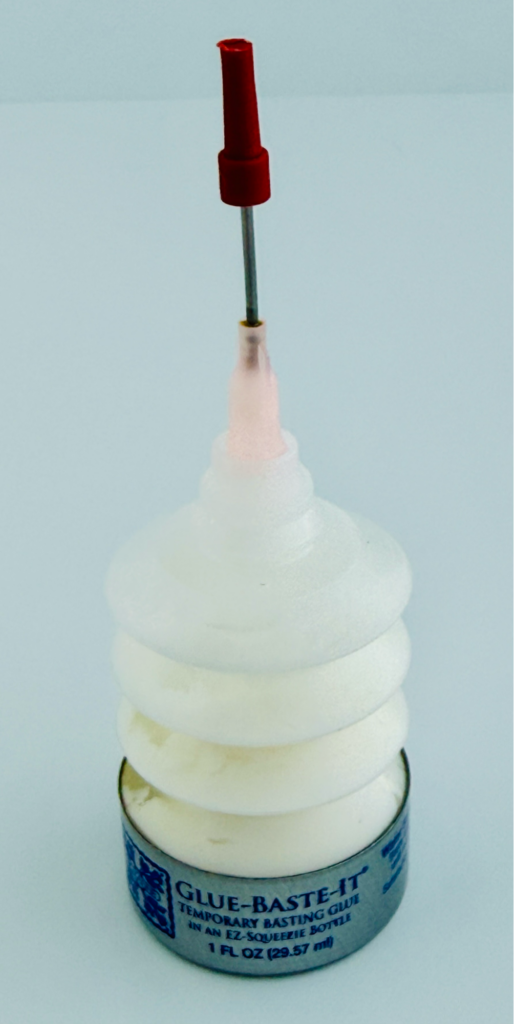
  • Roxanne’s Glue Baste-It
  • Clover seam ripper
  • Pins
  • Matching thread
  • Hand-sewing needle or sewing machine

For optional trapunto, you will also need:

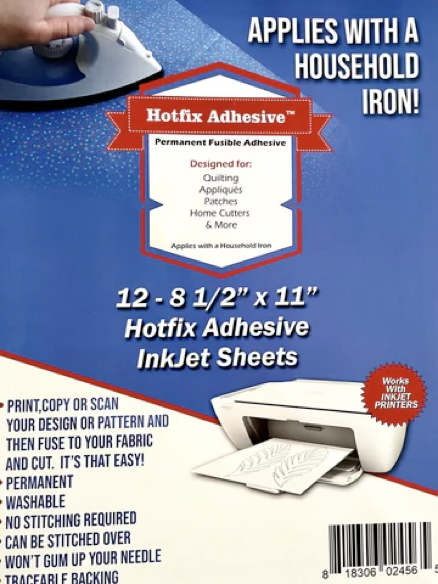
  • Hot Fix Adhesive Sheets
  • Low-loft batting
  • An iron and pressing cloth, if needed
Perfect Piecing transparent foundation sheets used to print an appliqué placement guide.
Roxanne’s Glue Baste-It bottle used to hold turned appliqué edges in place before stitching.

How to Make a Printable Appliqué Placement Guide

One of the easiest ways to simplify turned-edge appliqué is to create a placement guide instead of tracing directly onto your fabric.

Place a sheet of Perfect Piecing in your copier’s paper tray. Then place your pattern on the copier and press print.

That is it. You now have a placement guide.

There is no tracing required. If your pattern is larger than 8 1/2″ x 11″, simply copy and print it in sections.

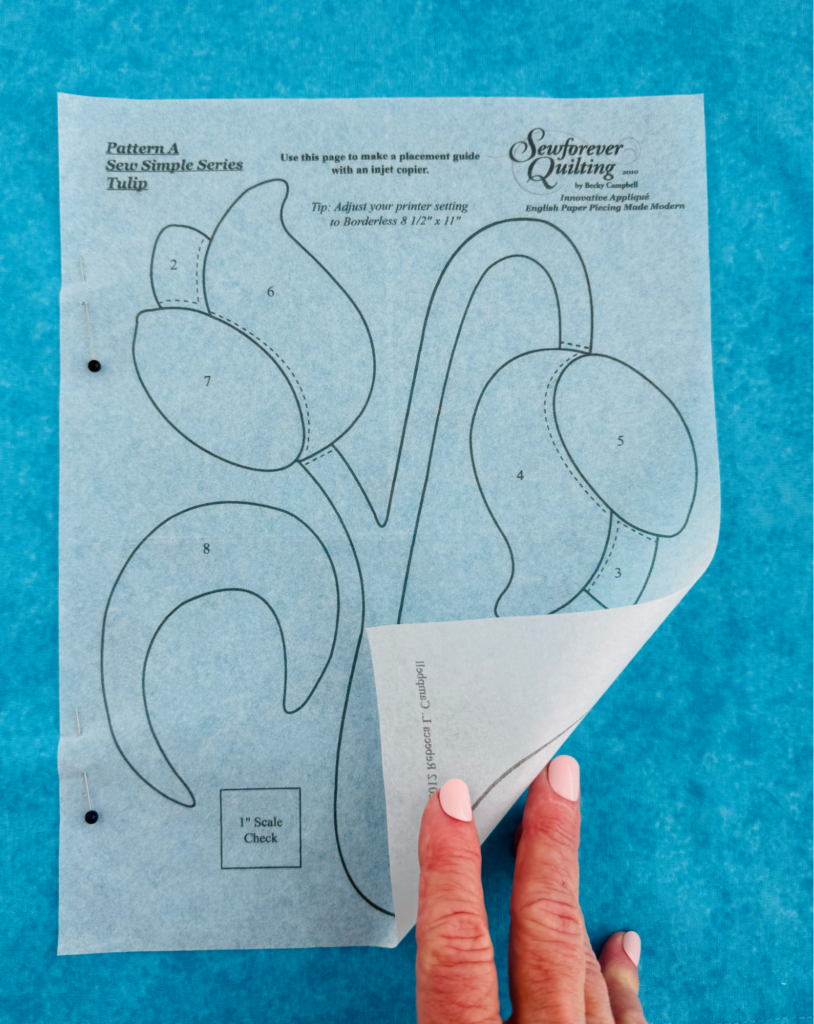
In my patterns, this is called Pattern A. It is your placement guide and helps you know exactly where every appliqué shape belongs on the background fabric.

Pattern A placement guide and Pattern B appliqué template page shown side by side for turned-edge appliqué.
Printed appliqué placement guide pinned to blue background fabric and opened like a book for precise shape placement.

How to Make Appliqué Templates Without Tracing

Next, you will create your appliqué templates.

Place a sheet of heavyweight freezer paper in your copier’s paper tray. Make sure you print on the paper side, not the waxy side. Place your pattern on the copier and press print.

Instant appliqué templates—no tracing needed.

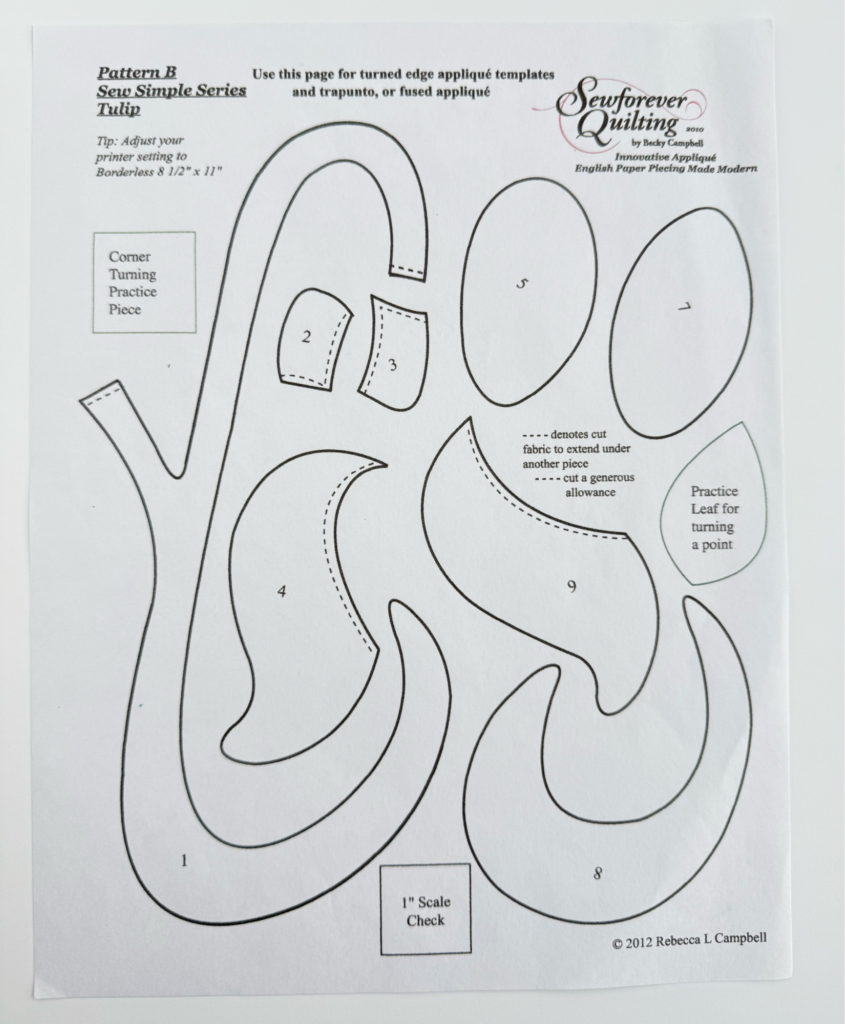
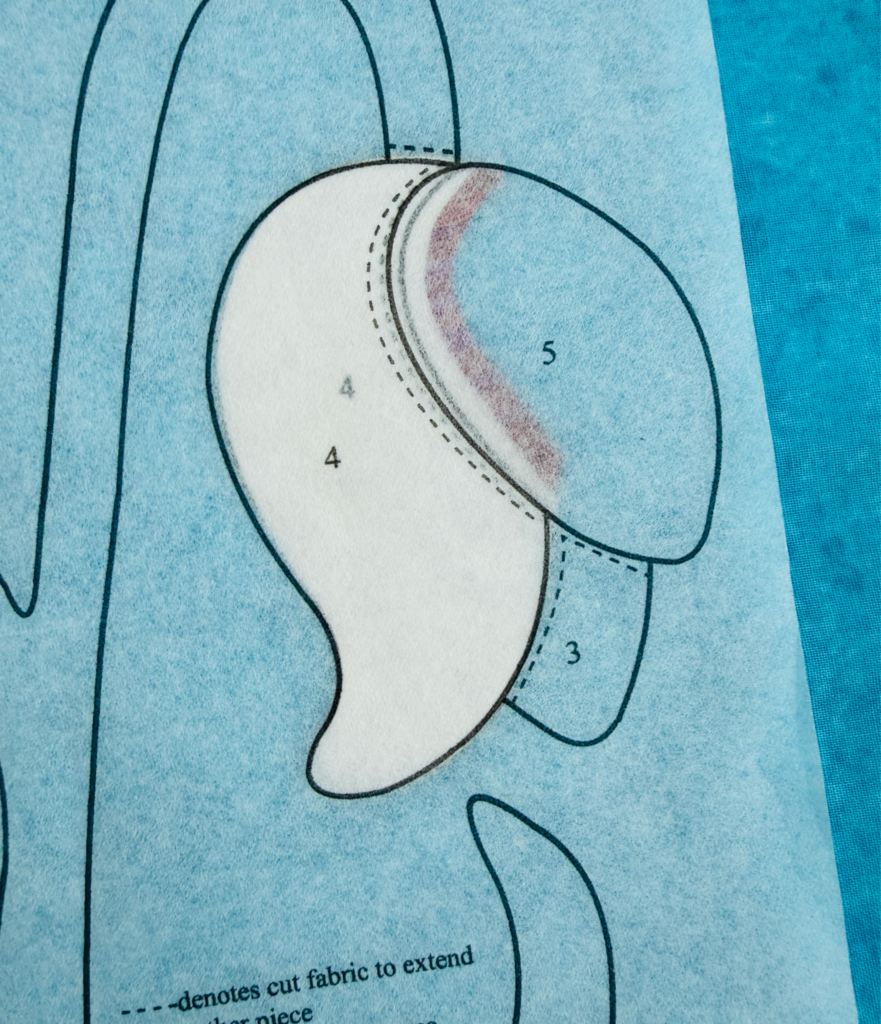
In my patterns, Pattern B includes the appliqué templates. I separate the shapes, number them in the order they will be layered onto the right side of the background fabric, and use dashed lines to show areas that will be hidden underneath another shape.

You can use this process with other appliqué patterns, too. Simply number your shapes in the order they will be placed on the background fabric and mark the hidden areas with dashed lines.

Pattern B appliqué template sheet with numbered shapes, dashed overlap lines, and practice pieces.

How to Cut Freezer Paper Templates

Cut your freezer paper shapes along the solid lines. Do not cut along dashed lines.

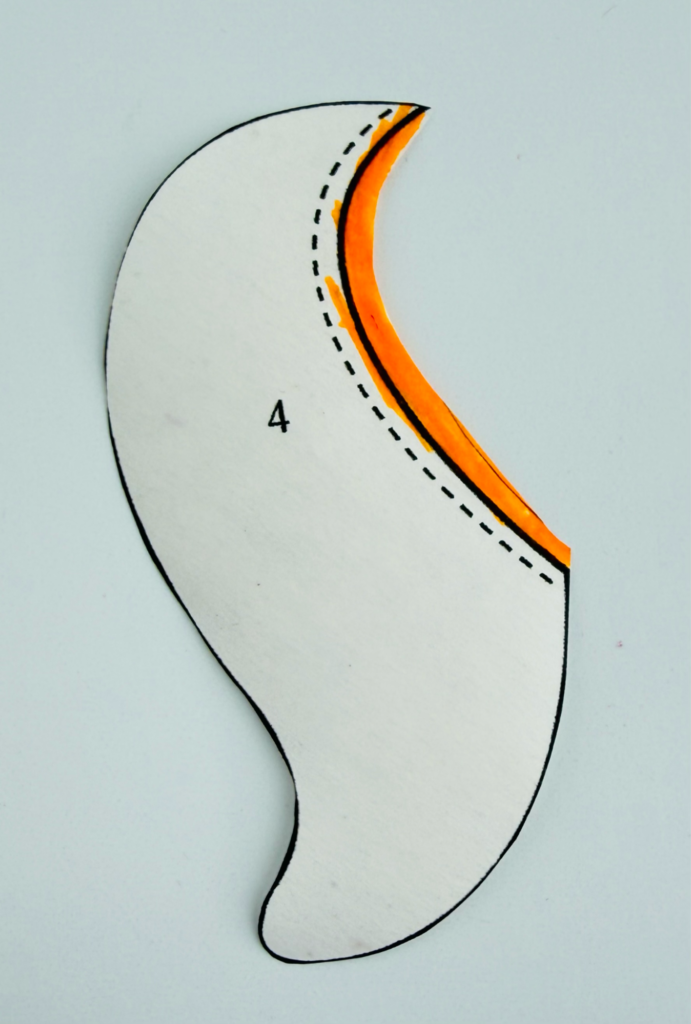
Dashed areas show what will lie beneath another appliqué shape. Leave extra freezer paper in those areas as a reminder that you will later trim away the extra fabric underneath.

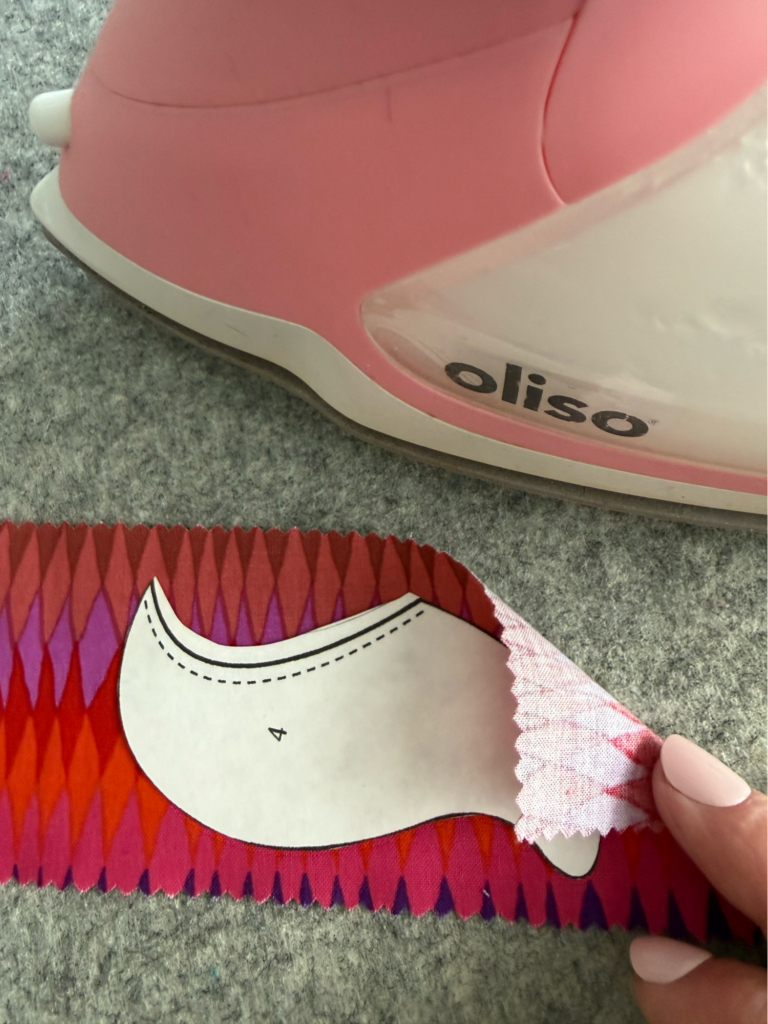
Then, iron the freezer paper templates to the right side of your fabric.

This is an important part of the method. Because the freezer paper is on the right side of the fabric, you do not have to stitch it down and then cut it out from the back of your project later.

Appliqué template showing the dashed line that indicates fabric extending beneath an overlapping shape.

How Much Seam Allowance Do You Need for Appliqué?

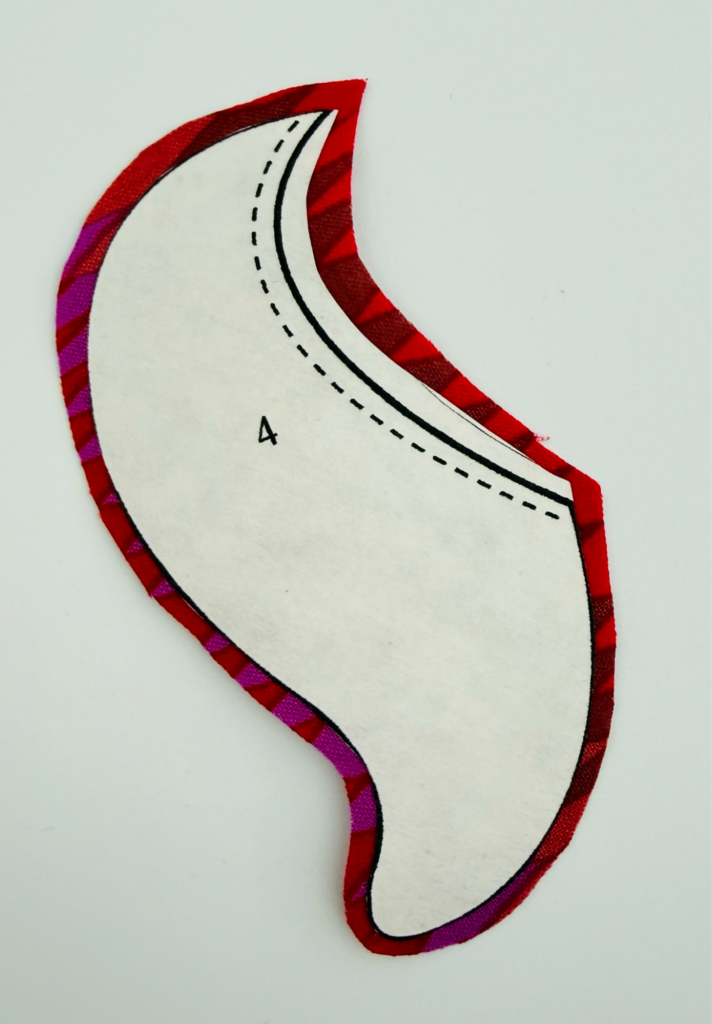
Trim around each fabric shape with about a 3/16″ turn allowance.

That may sound technical, but it is simply a little less than 1/4″. A slightly smaller allowance makes it easier to turn the fabric edge down smoothly.

In the dashed areas, trim away extra fabric by about 1/4″ to 1/2″. You do not need to measure precisely. This is only a guide to help reduce bulk under overlapping appliqué shapes.

How to Turn Appliqué Edges With Glue

After trimming your fabric shape, apply a thin line of Roxanne’s Glue Baste-It along the seam allowance.

Roxanne’s Glue Baste-It is water-soluble, so it washes out. It grabs quickly, which keeps the process moving, and the ergonomic bottle makes it easy to apply just the right amount of glue.

For turning the edge, my favorite tool is a Clover seam ripper.

The flat side of the seam ripper is excellent for pulling the fabric edge toward the glue. Hold it like a pencil and work from above rather than trying to scoop the fabric from below.

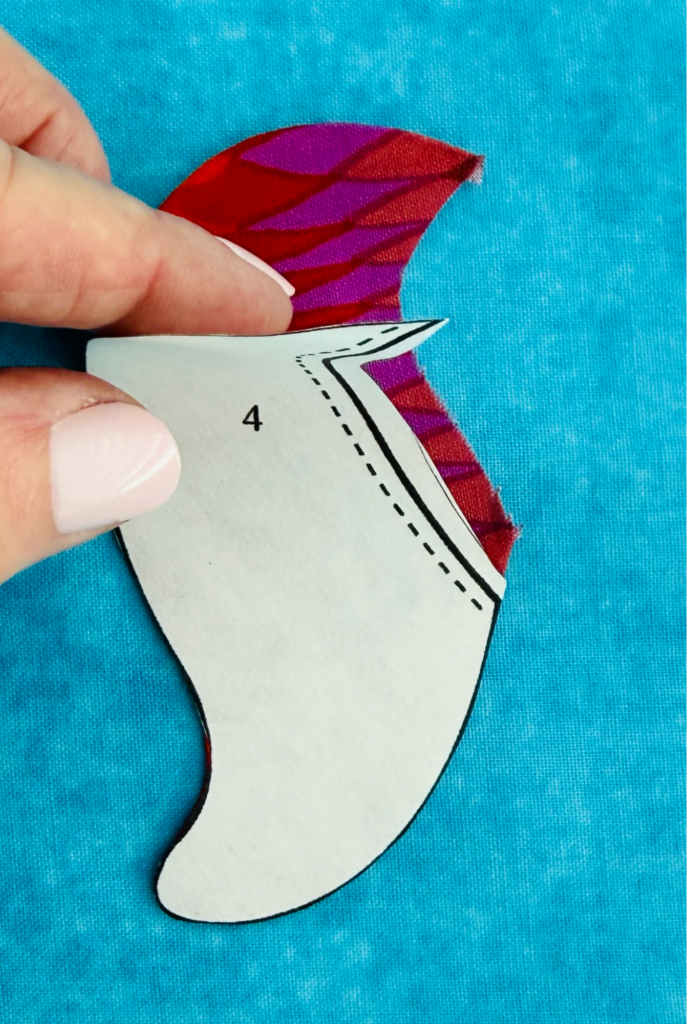
Turn the cut edge down toward the glue, then finger-press it in place. Continue turning and finger-pressing around the entire shape.

Do not turn the dashed areas. Those areas will be hidden underneath another appliqué shape.

Clover seam ripper and appliqué awl shown side by side for turning fabric edges in turned-edge appliqué.
Thin line of glue applied to the seam allowance of a fabric appliqué shape before turning the edge.

How to Position Appliqué Shapes Without Pins

Now it is time to use the placement guide you printed earlier.

Pin the placement guide to the right side of your background fabric. Place the pins along the left side so the guide can open like a book.

Apply a small amount of Roxanne’s Glue Baste-It to the wrong side of your turned-edge appliqué shape.

Slide the shape underneath the placement guide, position it where it belongs, and finger-press it in place.

Then, carefully pull the freezer paper away from the top of the shape.

This step is worth celebrating: there is no freezer paper to cut out from the back of your project.

Do not stitch anything down yet. The glue will hold the shapes in place as you continue positioning the rest of your appliqué pieces. No pins are needed, which also means no thread catching or tangling around pins as you work.

When all of the shapes are in place, remove the placement guide.

Now you are ready to stitch.

Red fabric appliqué shape positioned on a printed placement guide before stitching.

How to Hand Stitch Turned-Edge Appliqué

To hand stitch your appliqué shapes, use a single strand of matching thread.

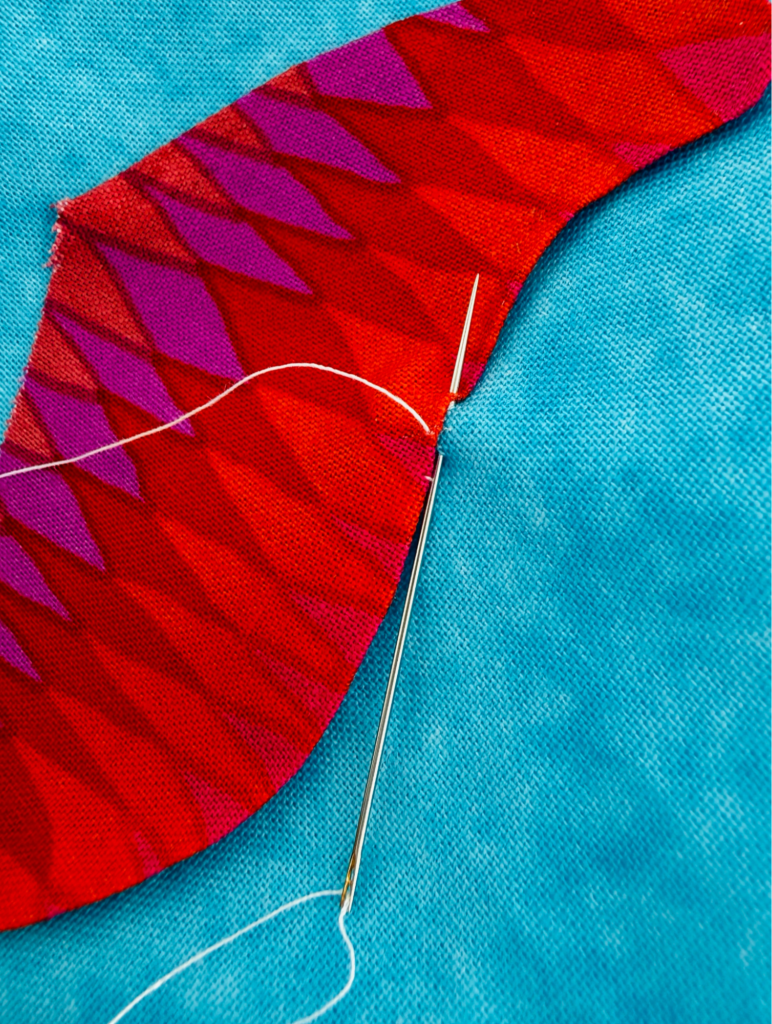
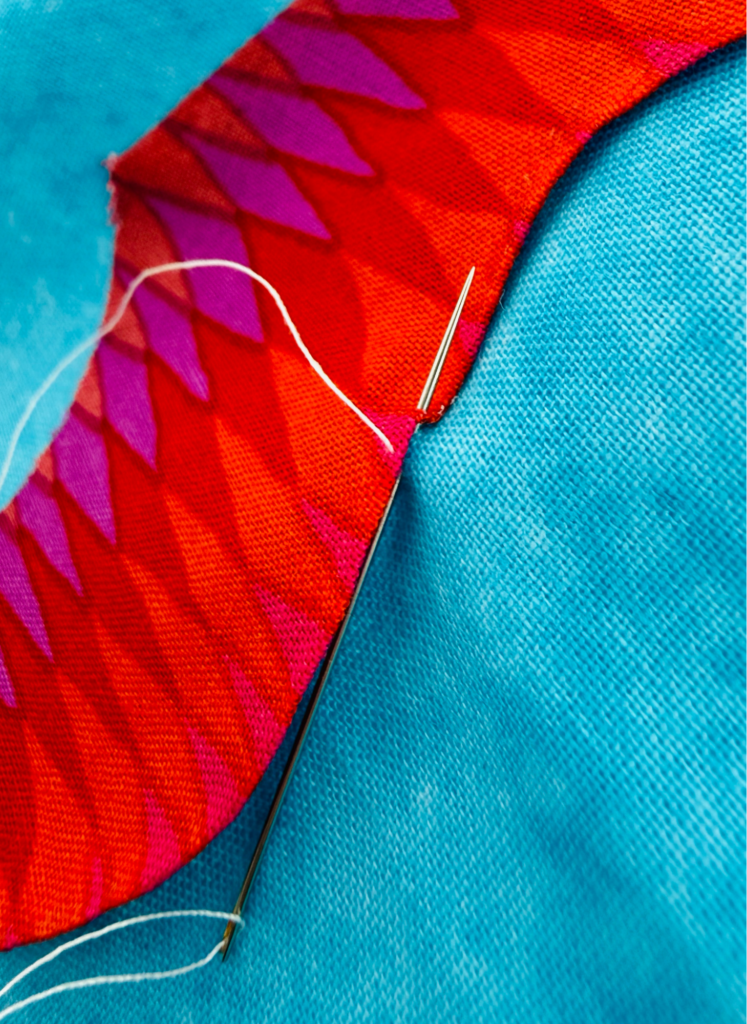
Knot the thread and bring the needle up through the background fabric so the knot stays on the back of the project. Bring the needle up near the folded edge of the appliqué shape.

Stitch back down into the background fabric, just underneath the folded edge. Then bring the needle back up into the fold of the appliqué shape.

Continue this process around each shape.

When you use matching thread, the stitches will blend in beautifully and be difficult to see.

Hand needle stitching along the folded edge of a red turned-edge appliqué shape on blue fabric.
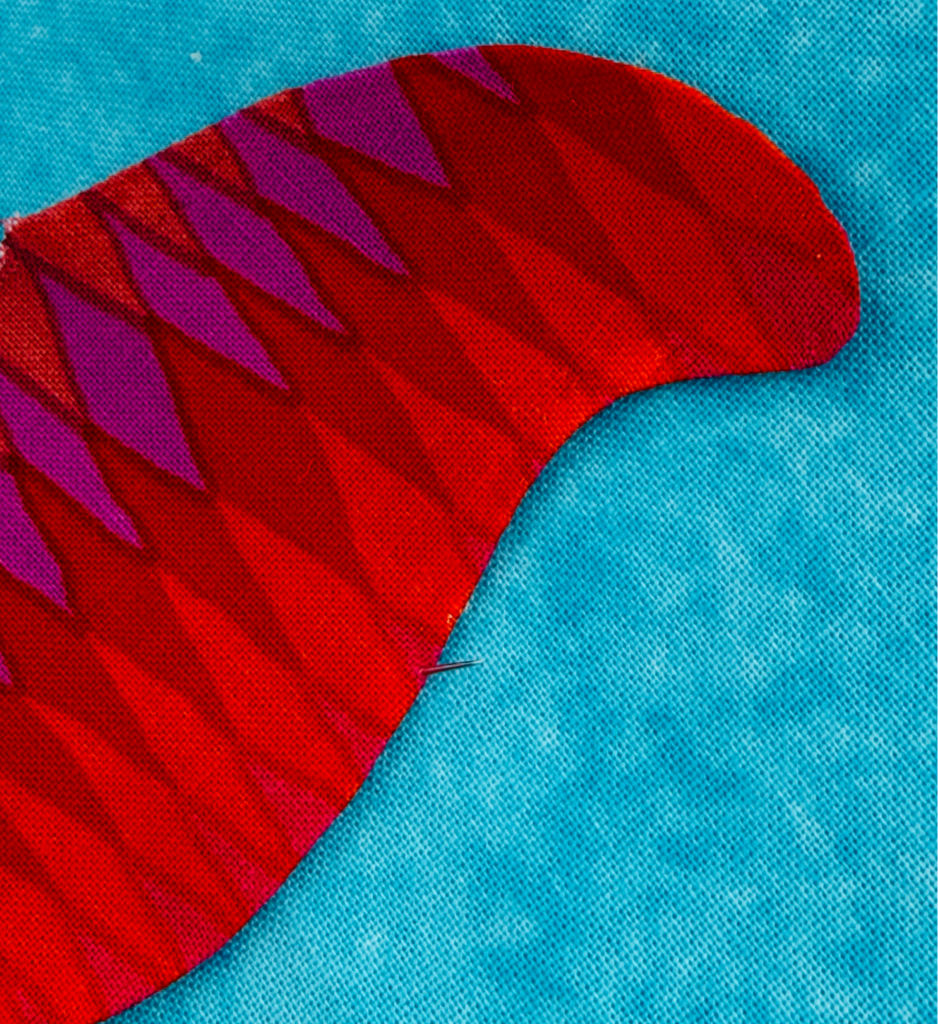
Hand stitching a smooth inside curve on a turned-edge appliqué shape with matching thread.
Close-up of hand stitching around the outside curve of a turned-edge appliqué shape.
Close-up detail of nearly invisible hand stitches securing a turned-edge appliqué shape.

Can You Machine Stitch Turned-Edge Appliqué?

Yes, you can absolutely stitch turned-edge appliqué by machine.

For machine stitching, reduce your stitch length to about 2.0 and stitch close to the folded edge of the appliqué shape.

You can also use a small zigzag stitch. I personally find it harder to get a perfectly smooth zigzag stitch around tight corners, but it is another great option depending on the look you want.

Choose the method that feels most comfortable and enjoyable for you.

Finished turned-edge appliqué flower quilt with layered blue petals and green leaves on an orange quilted background.

An Easy Trapunto Technique for Appliqué Quilts

Want to add dimension to your appliqué project? You can create a simple trapunto effect without using traditional trapunto techniques.

Traditional trapunto can feel overwhelming because it often involves cutting into the back of the fabric and stuffing batting underneath individual shapes. This method is much easier.

Start by copying the same pattern you used for your freezer paper templates onto a Hot Fix Adhesive Sheet. Then iron the printed adhesive sheet onto a piece of low-loft batting.

Low-loft batting means batting that is not especially fluffy. I love Dream Cotton, but use what you have available.

If you are using polyester batting, use a pressing cloth so the batting does not stick to your iron.

Cut the batting shapes slightly inside the solid lines, including the dashed areas. The shapes need to fit inside the stitching lines on the wrong side of the background fabric.

Remove the paper backing to reveal the fusible side. Place the fusible side against the wrong side of your background fabric, positioning each batted shape inside the corresponding stitching lines.

Iron one shape at a time. If you place all of the shapes at once, they may shift and end up outside the stitched lines.

Once the batted shapes are fused in place, add your regular layer of batting and backing to complete your quilt sandwich.

Quilt the background first to stabilize the project. Then stitch in the ditch from the front of the quilt to secure the batting underneath the appliqué shapes and create lovely dimension.

The batting does not go underneath the individual appliqué pieces before they are stitched down. Instead, it is fused to the back of the project after the appliqué is complete. It may feel counterintuitive at first, but it is a much simpler way to achieve a beautiful trapunto effect.

Low-loft batting shapes fused behind stitched appliqué pieces to create trapunto dimension.
Low-loft batting shape placed inside stitched appliqué lines on the back of a quilt block.

Ready to Try Turned-Edge Appliqué?

Turned-edge appliqué does not have to be slow, complicated, or intimidating.

With printable placement guides, freezer paper templates, glue basting, comfortable tools, and a clear process, you can create precise appliqué shapes with much less frustration.

All of my patterns include picture-based directions similar to the steps shared in this tutorial because I never want you to feel like you have to guess what a written instruction means when I can show you.

To browse my patterns, visit Sewforever.

I also created an on-demand Innovative Appliqué class for quilters who want a hands-on experience with this method. In the class, I cover my complete process, including time-saving techniques, turning small circles, and creating perfect round eyes.

Thank you for reading. I hope this tutorial inspires you to try turned-edge appliqué and discover how enjoyable the process can be.

Please feel free to share this post with a quilting friend, save it for later, and leave a comment with your questions.

MORE POSTS LIKE THIS

If you enjoyed this blog post tutorial, you’re going to love these other popular tips and tutorials:

  1. DIY Patchwork Jeans
  2. Denim Applique Tote
  3. Applique Sweatshirt Tutorial

or SEARCH THESE

Popular categories

Craft to Career
Digital Downloads
Patterns
Podcast
Quilt Alongs
Quilt Questions
Tutorials
back to the top

Copyright 2024 Quilters Candy  |  Terms & Conditions