
Flanged Binding Two Ways
Flanged binding is an additional narrow strip of fabric between the quilt and its binding for an extra pop or color and texture. There are multiple ways to create a flange for your binding. For this blogpost I’m calling them the Two Separate Strips method and the Single Strip method. I suggest using scrap batting and fabric to make a sample trivet to test out each method!
Grab my free binding reference guide above.
What you will need:
- Trimmed and squared quilt
- Binding fabric amount per instructions
- Ruler
- Iron + ironing board
- Rotary cutter
- Sewing machine
- Thread
- Hand sewing needle (Method #1 only)
- Thimble (Method #1 only)
- Binding Clips (Method #1 only)
Method #1: Two Separate Strips
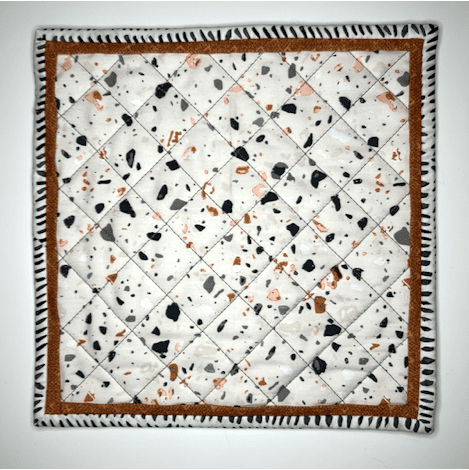
1. Pick out two contrasting fabrics. One to be the flange (1” wide), and one to be the true binding (2 1/4” wide). The flange for this tutorial is the orange fabric and the binding is the black and white fabric.
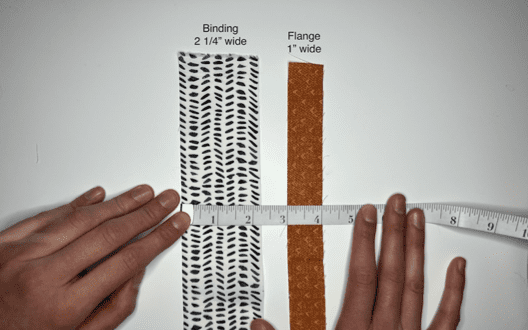
- Measure/calculate the perimeter of your quilt, then add 20”. Cut enough 1” wide x WOF strips to equal or surpass this number.
- Sew the 1” strips together with a diagonal seam, the same as you would when sewing regular binding.
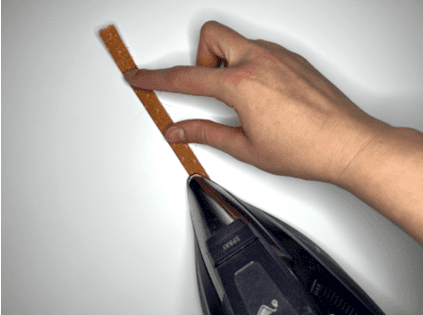
- Press in half lengthwise, wrong sides together.
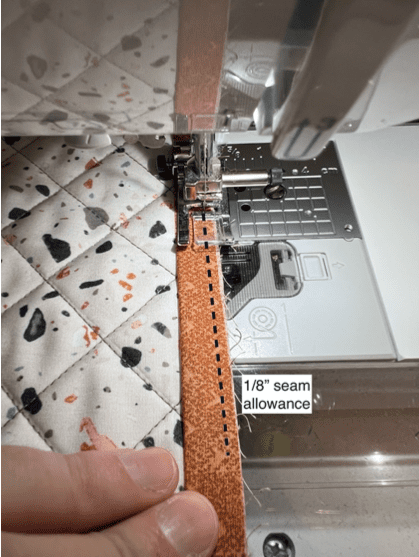
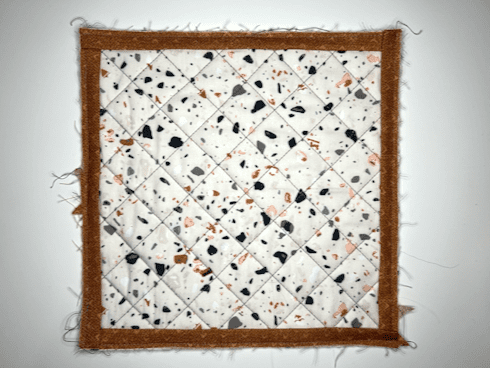
- Use a 1/8” seam allowance to sew the 1” flange to the front of the quilt, connecting the ends together the same as you would for regular binding (except using a 1/8” seam allowance). Miter the corners as you sew.
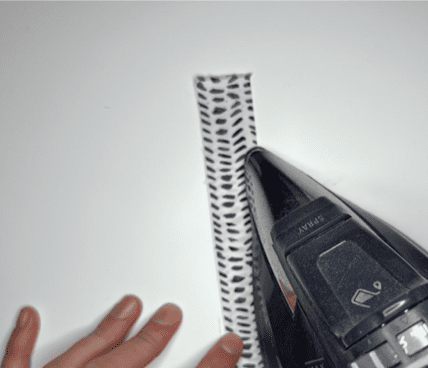
- Create your typical 2 1/4” (or whatever width you prefer) binding strips. Use the same number of strips as you did for the 1” binding. Press in half lengthwise, wrong sides together.
- Sew the 2 1/4” binding to the front of the quilt (on top of the existing flange) using a 1/4” seam allowance. Miter the corners as you sew.
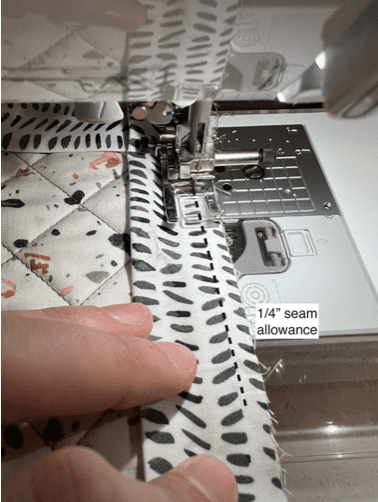
- Once you have connected the ends of the 2 1/4” binding and sewn in place completely, blind stitch the binding to the back side of the quilt.
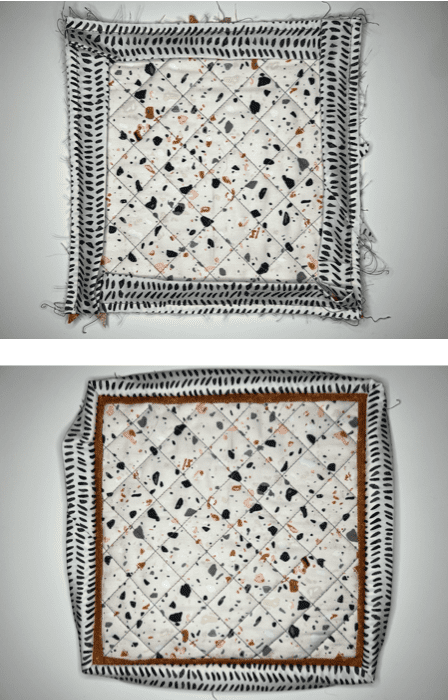
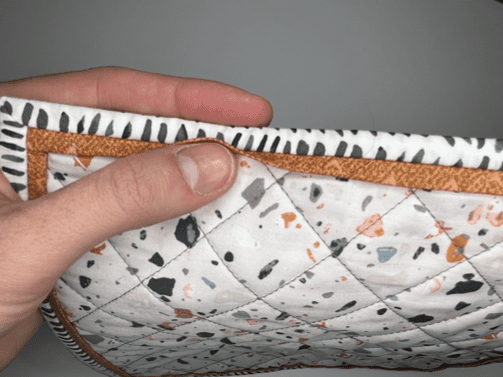
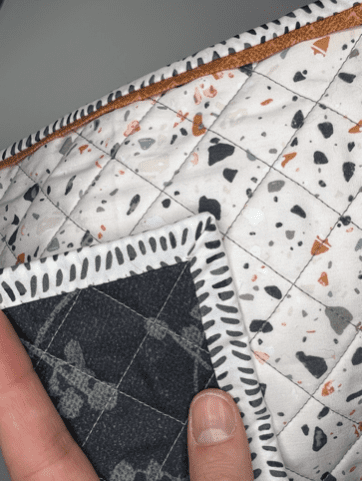
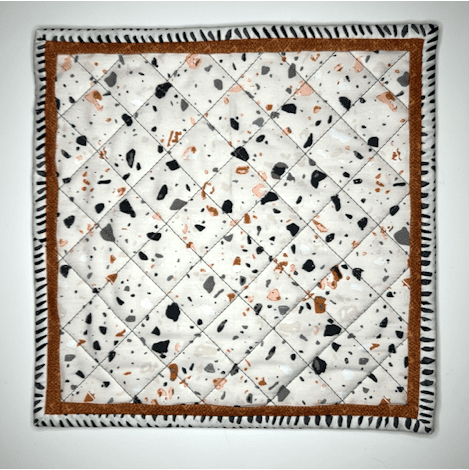
Note on possible variations: You can increase or decrease the appearance of the flange by altering the initial cut width. If you would like for less of the flange to show, try starting with a 3/4” wide flange strip. If you’d like to see more of it, try going up to a 1 1/4“ wide flange strip.
Method #2: Single Strip
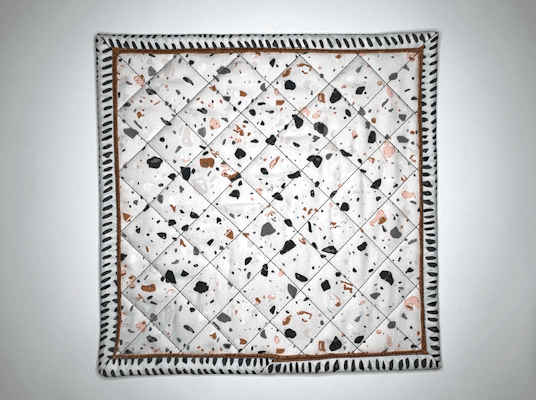
- Pick out two contrasting fabrics. One to be the flange (1 1/2” wide) and one to be the true binding (1 1/4” wide). It is correct for the flange to be wider than the binding for this method.
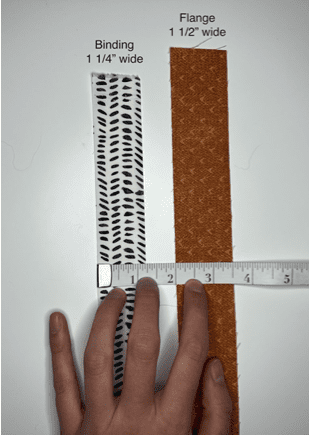
- Measure/calculate the perimeter of your quilt, then add 20”. Cut enough 1 1/2” x WOF flange strips and enough 1 1/4” x WOF binding strips to equal or surpass this number.
- Sew the 1 1/2” flange strips together with a diagonal seam. Trim the excess and press the seams.
- Sew the 1 1/4” binding strips together with a diagonal seam. Trim the excess and press the seams.
- Sew the flange strips to the binding strips lengthwise with a 1/4” seam, right sides together. This will make one long 2 1/4” wide strip.
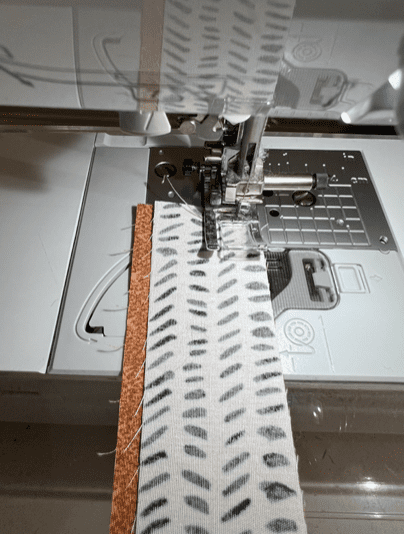
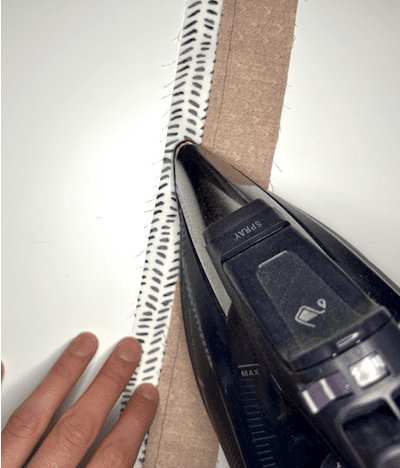
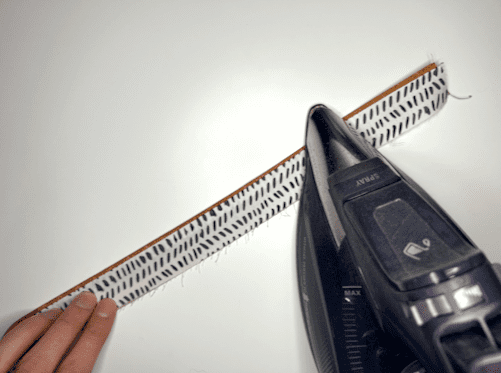
- Press the seam toward the binding, then press the strip in half lengthwise wrong sides together. The flange should just peek over the edge of the strip.
- Sew the binding to the BACK of the quilt using a 1/4” seam allowance. Miter the corners and connect the ends together the same as you would for regular binding.
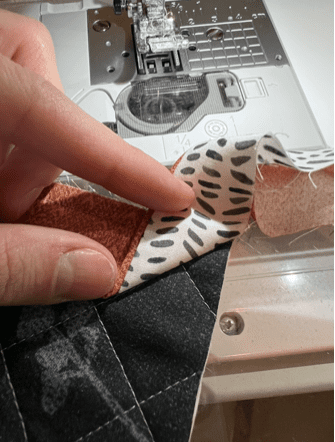
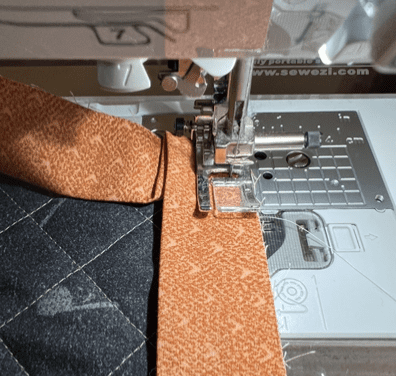
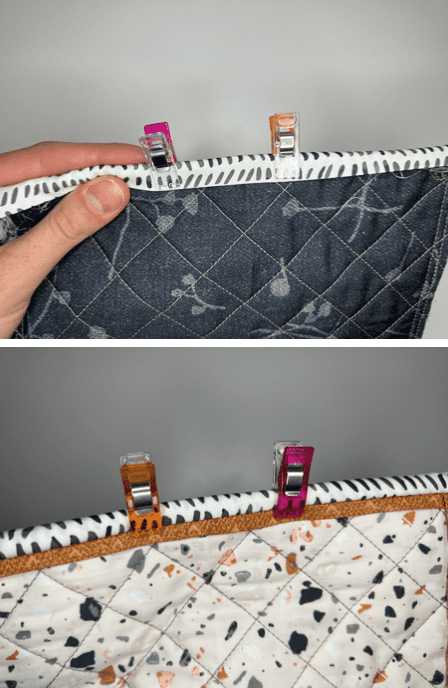
- Fold the binding over to the front. Stitch in the ditch between the flange and outer binding, mitering corners as you sew.
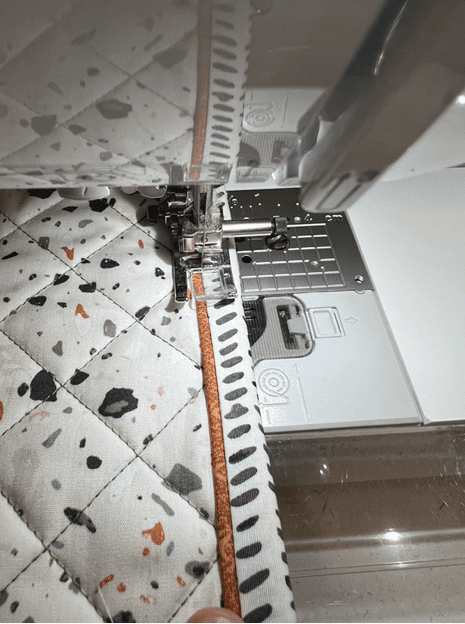
See below for what the back looks like using this method. Note that an extra seam will be present.
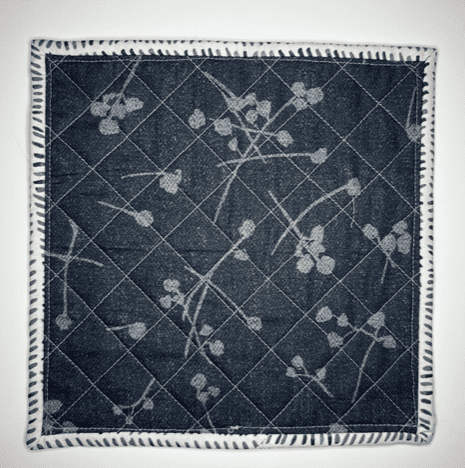
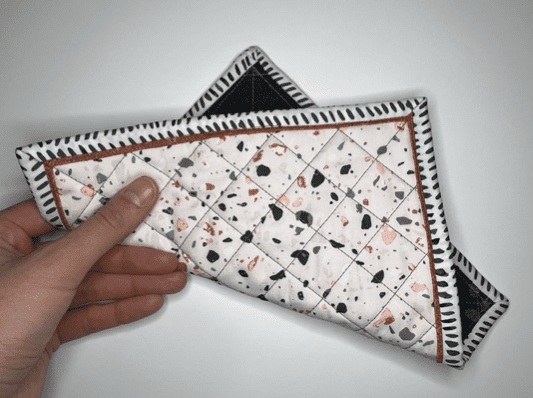
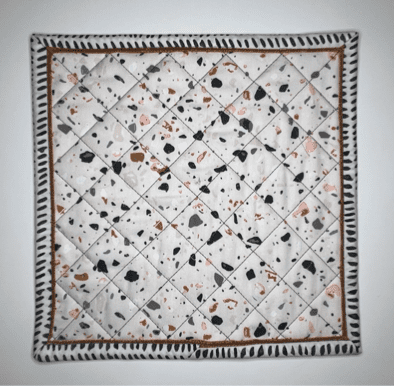
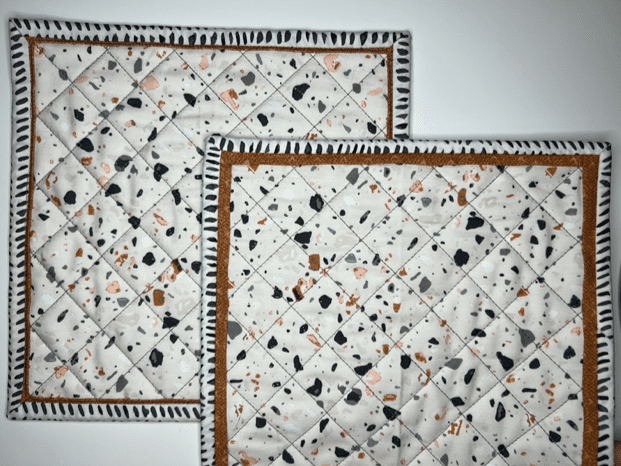
And that’s how you can make a flanged binding in two different ways! Here is a photo of my samples together for comparison. I hope that you will try both methods to see if a flanged binding is something you’d like to add to your next quilt!
If you want to learn another interesting way to bind your quilts, check out my tutorial on face binding and my free downloadable face binding quick reference guide! Happy sewing!
Julia Wachs
On Instagram: @juliawachs.designs
MORE BLOG POSTS LIKE THIS ONE
Did you enjoy this tutorial? Be sure to check out these free tutorials:
How to Deal With Quilt Project Overwhelm
RECENT BLOG entries
Flanged Binding Two Ways
Flanged Binding Two Ways
Flanged Binding Two Ways
Flanged Binding Two Ways
Flanged Binding Two Ways
Flanged Binding Two Ways

the latest
October 29, 2026
Should creative entrepreneurs use AI? In this episode of the Craft to Career Podcast, I’m sharing my personal thoughts on AI and how I’m thinking about it as a quilt pattern designer and small business owner. There’s a lot of backlash against AI right now, and much of it is for good reason. I talk […]
tune into the
Craft to Career
Podcast
Each week get insights on how to turn your craft into a successful career. With both guest speakers and tips from myself, you get valuable, free education on the Craft to Career podcast!