



How switching from pins to glue changed the way I piece quilt blocks, and how you can try it too.
For years, pins were part of my piecing routine. I’d pin at every seam intersection, sew slowly, and still end up with points that didn’t quite meet.
I was at my wits’ end. I reached out to a few quilters whose points always matched perfectly and asked if I could hire them to teach me. Let’s just say I never heard back.
Then, a few months ago, I decided to try something I’d heard about: using glue to hold my fabric in place before sewing instead of pins. My points started coming together consistently, seam after seam.
I’m not gatekeeping. Here’s what glue basting is, the supply options I’ve tried, and the tips I’ve picked up since I started.

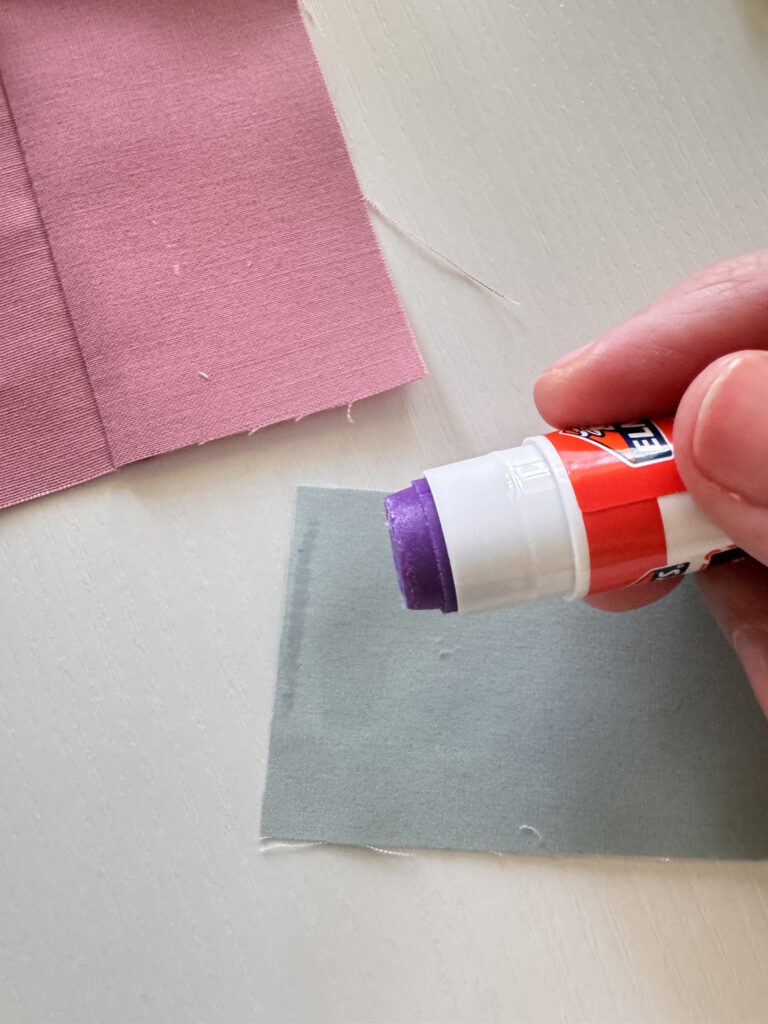
What Is Glue Basting?
Glue basting means using a small amount of washable lue, usually from a glue pen or glue stick, to temporarily hold two pieces of fabric together before you sew the seam. Instead of a pin holding the layers in place, a thin line of glue does the job. It holds firmly enough to sew through cleanly, then washes out completely once the block is finished.
Quilters have used glue basting for hand piecing and English paper piecing for a long time. Applying it to machine piecing is less common, but it works the same way: it keeps your fabric exactly where you placed it while you sew.
Why Glue Basting Improves Piecing Accuracy
When it comes to pins vs glue quilting, the difference comes down to what happens while you’re actually sewing. Pins can shift fabric as you sew over them, even when placed carefully. The fabric can bunch slightly near the pin, or you might unconsciously ease it as you pull the pin out mid-seam. Glue removes that variable entirely. Once the glue sets (I’ll share how to do this), your seam intersections and points stay exactly where you placed them until the needle reaches them.
A few reasons this matters for accuracy:
- No shifting of fabric or at the seam. The fabric is fixed in place before and during sewing, so there’s no slight shifting or moving while sewing.
- Better control at points and intersections. Y-seams, triangles, and matched points hold their position instead of moving under the presser foot.
- No pin removal mid-seam. You’re not stopping to pull pins, which means fewer interruptions and a more even seam.
- Less bulk under the needle. A thin line of glue lies flatter than a pin, especially at intersections where several seams meet.
How to Glue Baste for Piecing
What you’ll need:
- A washable glue pen quilting tool or glue stick made for fabric.
- I’ve actually used an Elmers glue stick and it worked great and was a great price.
- Your fabric pieces, pressed and ready to sew
- An iron


Steps:
- Align your fabric pieces right sides together, just as you would before pinning.
- Run a thin line of glue along the seam allowance, about 1/8 inch from the raw edge. A little goes a long way. Too much glue can show once you open the seam, but that’s not a problem. It washes out the first time you launder the finished quilt.
- Press the pieces together with your fingers. Make sure the pieces are lined just the way you want them to be sewn together.
- Set with heat by placing a hot iron over the glued fabrics. This step matters. It’s what makes the bond secure enough to sew through.
- Sew your seam as usual, right through the glued area.
Press open or to the side as your pattern calls for. The glue washes out the first time the finished quilt is laundered.
Note: Because the glue holds the seam together, you may need a seam ripper to open it rather than pulling it apart by hand.
Tips for Getting Started
- Start with a small block or a single seam to get a feel for how much glue to use before committing to a full quilt top.
- Be sure to set the glue with heat. Skipping this step is the most common reason a glued seam doesn’t hold.
- Keep the glue line inside the seam allowance so it doesn’t show or stiffen the visible part of the block.
- Glue basting works especially well for smaller pieces or strip piecing, where fabric can shift.

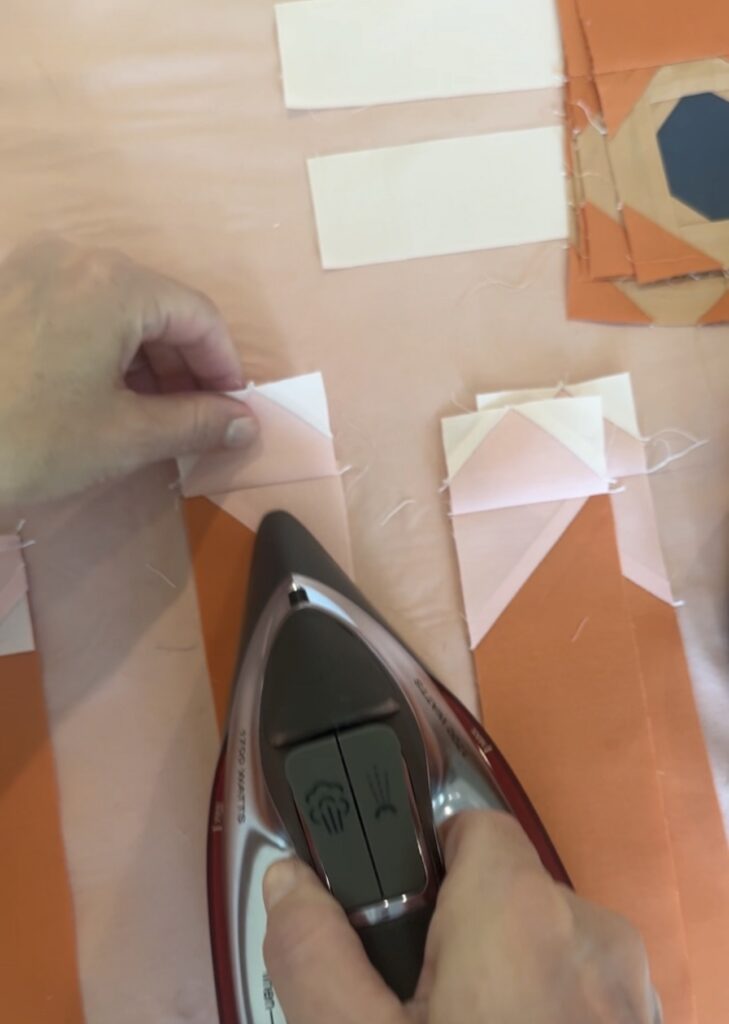
Is Glue Basting Right for Every Project?
As with all things, decide what works best for you. For me, glue basting isn’t a replacement for pins in every situation.
For long straight seams, like joining rows or borders, pins (or clips) still do the job well and don’t require the extra heat setting. Where glue really shines is in the detail work: matching points, easing in curves, and holding small pieces still while you sew.
Many quilters end up using both methods, choosing whichever one fits the seam in front of them.
Give It a Try
If matching points and clean intersections have been a struggle, glue basting is worth testing on your next block. Start small, get a feel for how much glue to use, and see whether it changes your accuracy the way it changed mine.
Have you tried glue basting before? I’d love to hear how it worked for you.
MORE TUTORIALS YOU'LL LOVE
If you enjoyed this tutorial, you are going to love these tutorials as well!